The Pastor's Kids

The Pastor's Kids
Showing posts with label Gish Jen. Show all posts

Saturday, February 21, 2015

An Interdependent Family

After almost five years of planning, The Pastor’s Kids, the first book in the series So Are You to My Thoughts, is out, published and available! (You can buy it here or direct from mailto:lightlyheldbooks@gmail.com.) I’m amazed at how long it is. 270 pages, given the white space that I like to see on the page. It’s a journey, for those who are willing. I’ve been struck recently by the lost world described in the book, in which inner aspiration is more important than material riches. And words are actions, so real they must be used carefully.

The Pastor’s Kids breaks all the current marketing rules. It is a coming-of-age story, narrative fiction, but has no fixed age group for which it is intended. And, its only plot is an unfolding, like life. As my brother Dave wrote, “The reader has no idea where (s)he is going, or why (s)he should go there,  but finds him(her)self curious about how these little lives will unfold. This absence of a ‘central driver’ to the stories is very refreshing. Unfortunately, however, I think it may make it less likely to be attractive to some readers, who are addicted to the captivating quality of a problem thread to be resolved, a question to be answered. Loved the book.”

The Mikkelsons grow up in an interdependent family, as Gish Jen uses the term in her book, Tiger Writing: Art, Culture and the Interdependent Self. Jen believes that in Asian narratives individuality is subsumed in family and culture. I maintain that many family cultures foster this sense of interdependence, in which each member contributes to the survival, the health and the joy of the others. Line, Marty and Paul are deeply aware of each other and their Norwegian Christian culture. Each chapter is told in the point of view of one of these three narrators, and in this first book in the series, we see the bedrock of the family’s story.

And there are things to resolve. One question is Paul’s bout with polio. He is sequestered in clinics for part of the book, then has two major surgeries to try to undue the damage polio has done to his muscles and tendons. Will Paul get to have the life he wants? Another question is what is going on with Ellie, the oldest Mikkelson sister. She lives alongside her active siblings, but seems to have a secret life. What is she thinking?

Overall, the series So Are You to My Thoughts shows that growing up in a powerful family structure allows the kind of individuation in which a person can become the self they were meant to be, to align their inner and outer worlds over time. And it does take time. Line, Marty and Paul are very different people and love and work happen for each of them differently. Their ideas and desires take them far from home and force them to make their own lives, as people of their generation did. But the circle of family their parents generated is very strong, and they never lose the sense of being in touch.

So! The Pastor’s Kids unfolds in a particular place and time, the Eisenhower years between 1952 and 1960, in the upper Midwest. Though post-war optimism and a growing awareness of diversity affected everyone, I am still amazed as I look back, at how the Scandinavians managed to maintain an isolated, unique culture for so long. Line, Marty and Paul begin to push against this in subsequent books in the series, developing their own individual stories. But The Pastor’s Kids, true to its time, reminds us that dignity once had value. Words and actions expressed it. I guarantee you will not be ashamed to read it to your kids!

Monday, June 23, 2014

Half Way Mark

This year’s book in the series about the Mikkelsons, Pulled Into Nazareth, was slow getting started. I was doing more research for the book, as some of it is set in places I’ve never been. And also, things just seemed to get in the way of writing. In May I started worrying. The previous year I had been much further ahead. Would I finish half the book by the end of June? I began to put writing first, and yesterday I uploaded chapter 14 to the location where my first readers can find it, reaching the half way mark.

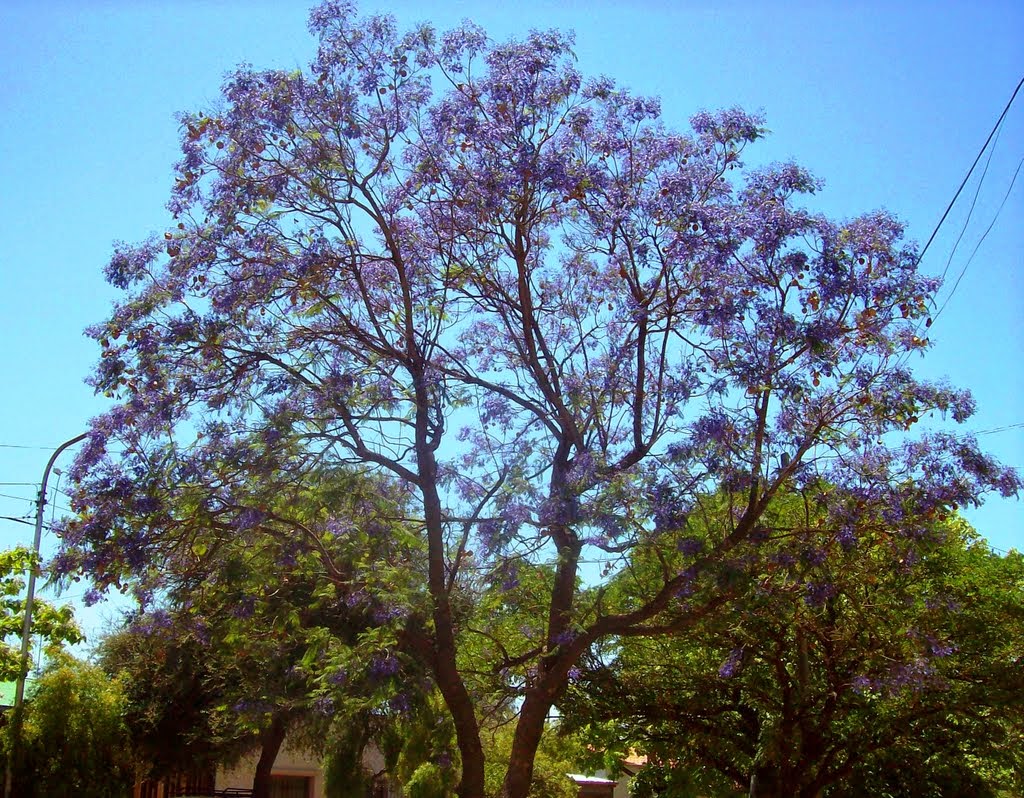
As I walked through San Rafael yesterday I noticed that the majestic old jacaranda which grows in a street park near the reconstructed Mission was blooming. The mysterious, spicey scent of the blue trumpet-flowers opened up in the hot, sunny afternoon, but the thick branches made a heavy shade and under the tree fallen blue flowers carpeted the grass.

I haven’t lived with many jacarandas, so each has been special. The first was in North Oakland, in a residential neighborhood which I passed through each day on my way to work. I struggled with the name jacaranda, which was pronounced with the ‘j’ sounding more like an ‘h.’ Its origins are lost in time, but is believed to be from a Guarani (an indigenous language of South America) word meaning ‘fragrant’. I especially enjoyed the few weeks in early summer when it bloomed.

Toward the end of those years, I talked to the owner of the tree. She threatened to cut it down as its roots were upending the concrete sidewalk. She was older and had no money to pay for insurance claims. So sad, I thought. Then I worked in Los Angeles for a few weeks in spring and found little ornamental forests of jacarandas on the plaza levels above the downtown streets.

Place is so important to all of us. Jacarandas don’t grow everywhere. Here the coastal morning fog cools us each night and clear, bright days are leaving us a very dry summer. But we are listening to the predictions of an El Niño which scientists perceive developing off the Pacific coast and hopeful that winter rains will alleviate our drought. I have long felt much more related to the rim of the Pacific than to Europe. Does this affect my writing, I ask myself.

When a Japanese-born friend tells me she is reading a lot of the Shishōsetsu, or I-novels written in Japanese, I research these and find that they are a particular genre in which writers used the events of their own lives for their subjects. Beginning in the early 20th century, the writers wished to portray a realistic view of the world involving real experiences, often showing the darker side of society. Except for the realism involved, this did not sound like my work.

But then I found that Gish Jen, a contemporary American-born Chinese writer, has written a book entitled Tiger Writing, about the “profound difference in self-narration that underlies the gap often perceived between East and West.” She believes that the novel is essentially a Western form that values originality, authenticity and the truth of individual experience, while Eastern narrative emphasizes morality, cultural continuity, the everyday, the recurrent.

I’ve had trouble thinking of the stories about the Mikkelson kids as a series of novels, though by some definitions, the novel is such a big envelope it can contain almost any kind of fiction. My work is certainly about “cultural continuity, the everyday, the recurrent.” It’s about family and how our personal and public lives interact, with emphasis on the private aspects. In the end, of course, I am not the one to say what the books become. I must just write them and hope that they eventually find their audience.